The Texas Clipper
A warship that carried the wounded from Iwo Jima. A luxury liner that sailed the Mediterranean. A training ship that circled the world. And since 2007 — the premier dive site in the state of Texas.
Reefed November 17, 2007A Ship with Three Lives
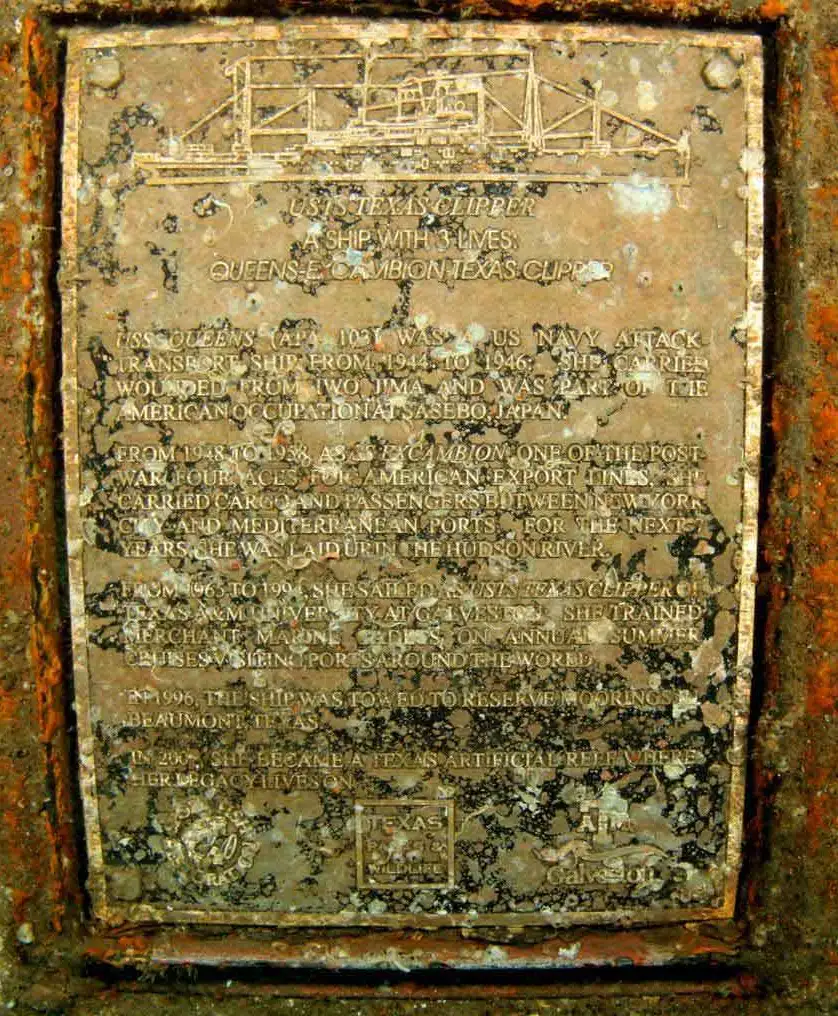
The plaque on her hull, resting 136 feet below the Gulf of Mexico, reads it plainly: Queens — Excambion — Texas Clipper. Three names. Three complete lives. One ship.
Life One
USS Queens
1944–1946Built as a US Navy attack transport, the USS Queens served in the Pacific theater during World War II. She carried wounded from Iwo Jima and participated in the American occupation of Japan — the first attack troop transport to arrive at the island.
Life Two
SS Excambion
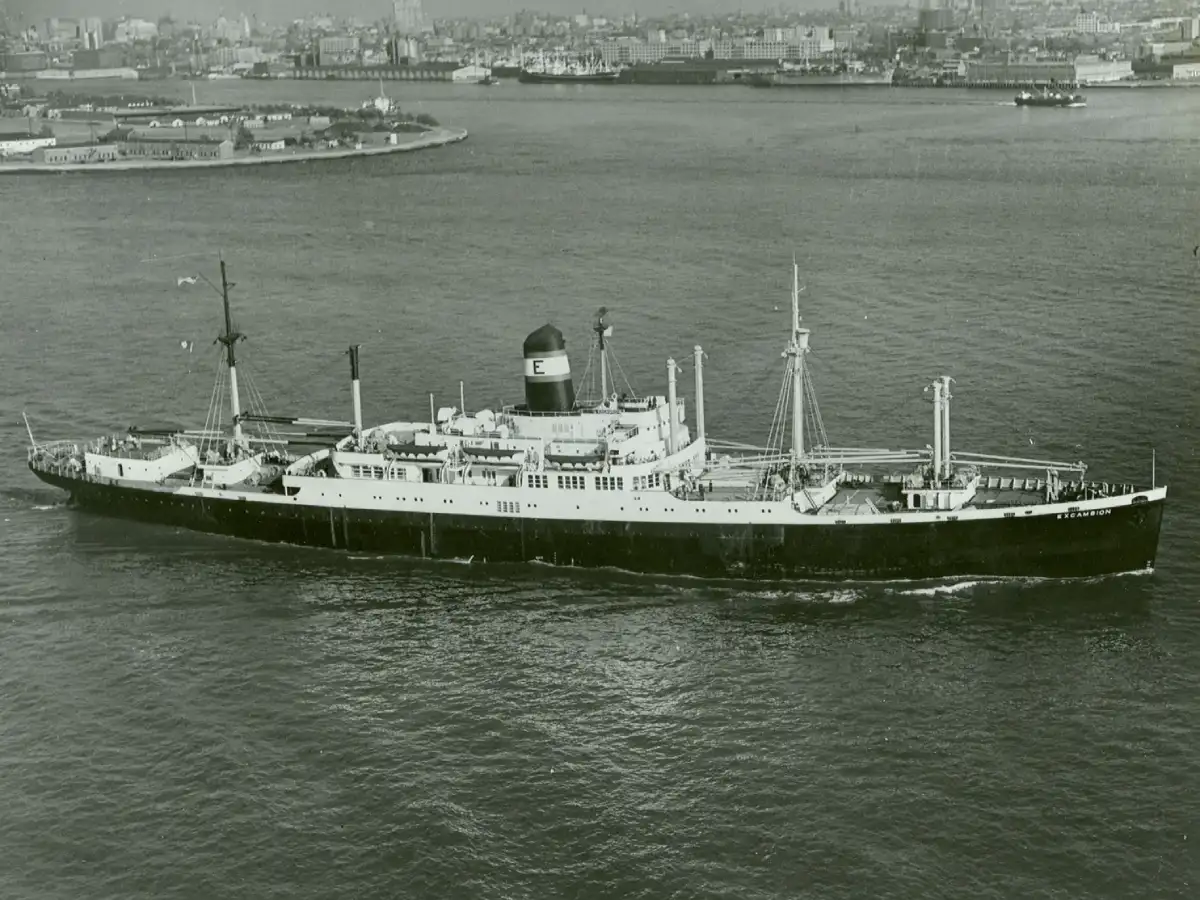
1948–1965Retrofitted as a luxury liner, she became the SS Excambion — one of the celebrated "Four Aces" of American Export Lines. She carried passengers and cargo in style between New York City and the Mediterranean until commercial aviation made ocean liners obsolete.
Life Three
USTS Texas Clipper
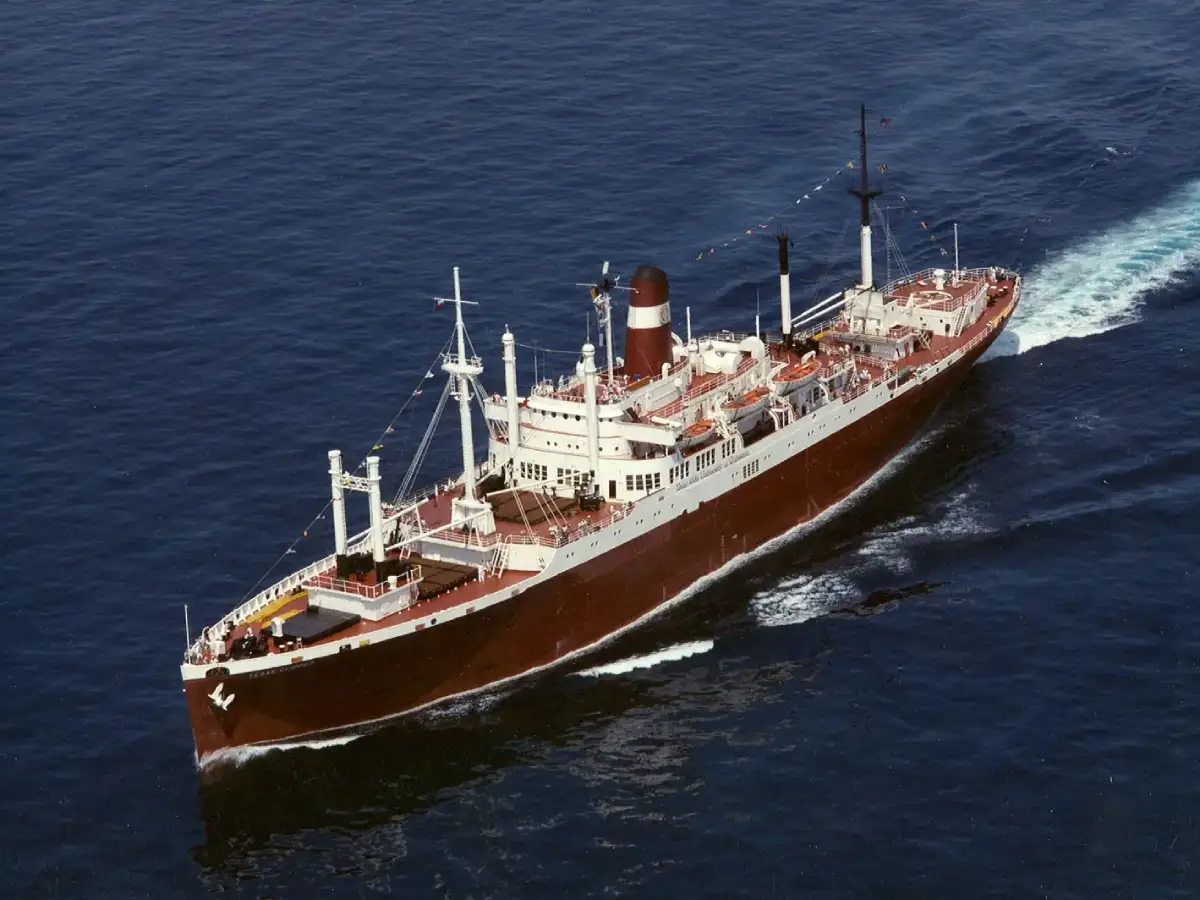
1965–1996Rescued from dismantling by Texas A&M University-Galveston, she became the USTS Texas Clipper — a maritime training vessel that took cadets on annual summer cruises to ports around the world. For thirty years she trained the next generation of merchant mariners.
The Dive of a Lifetime
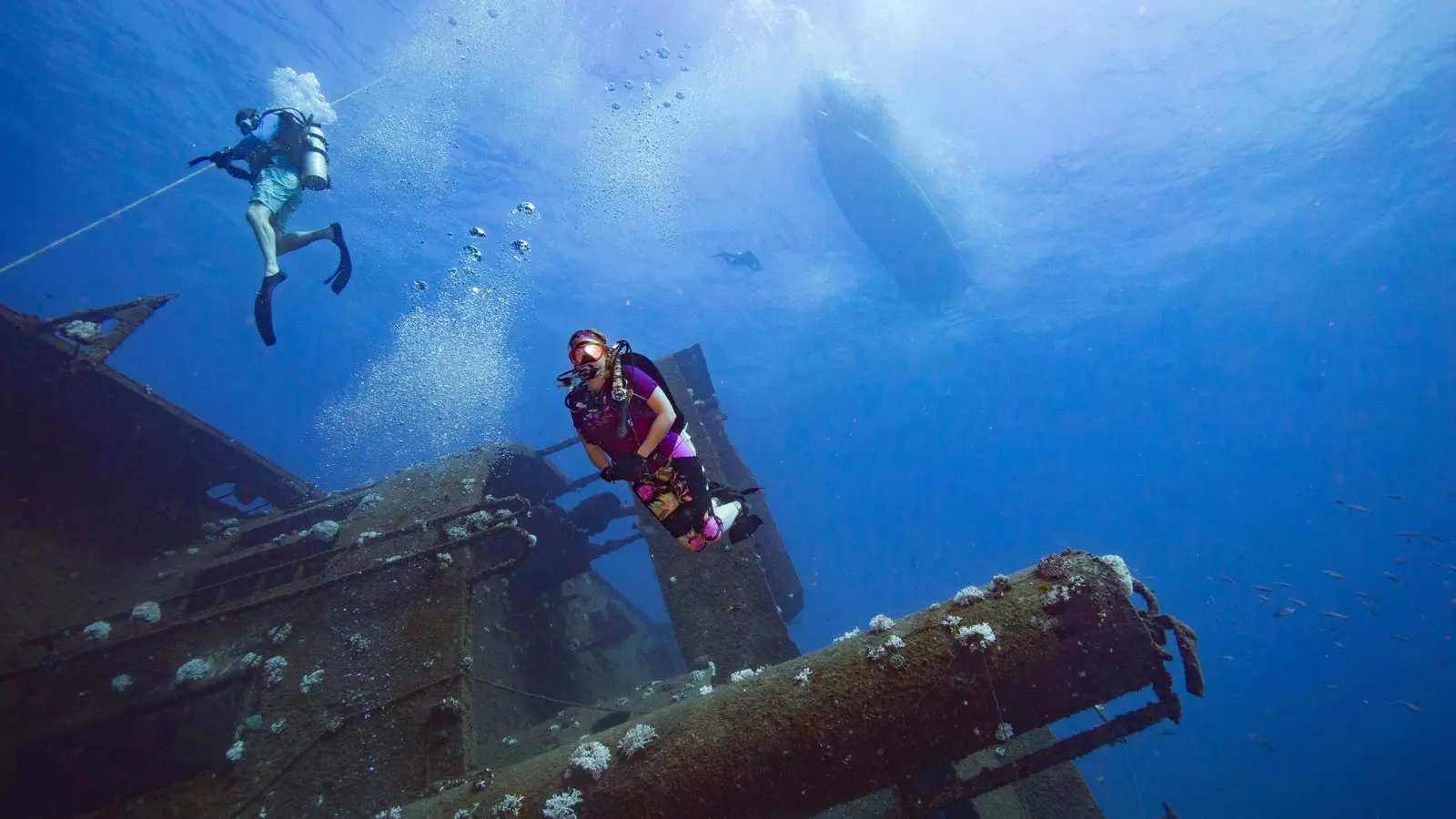
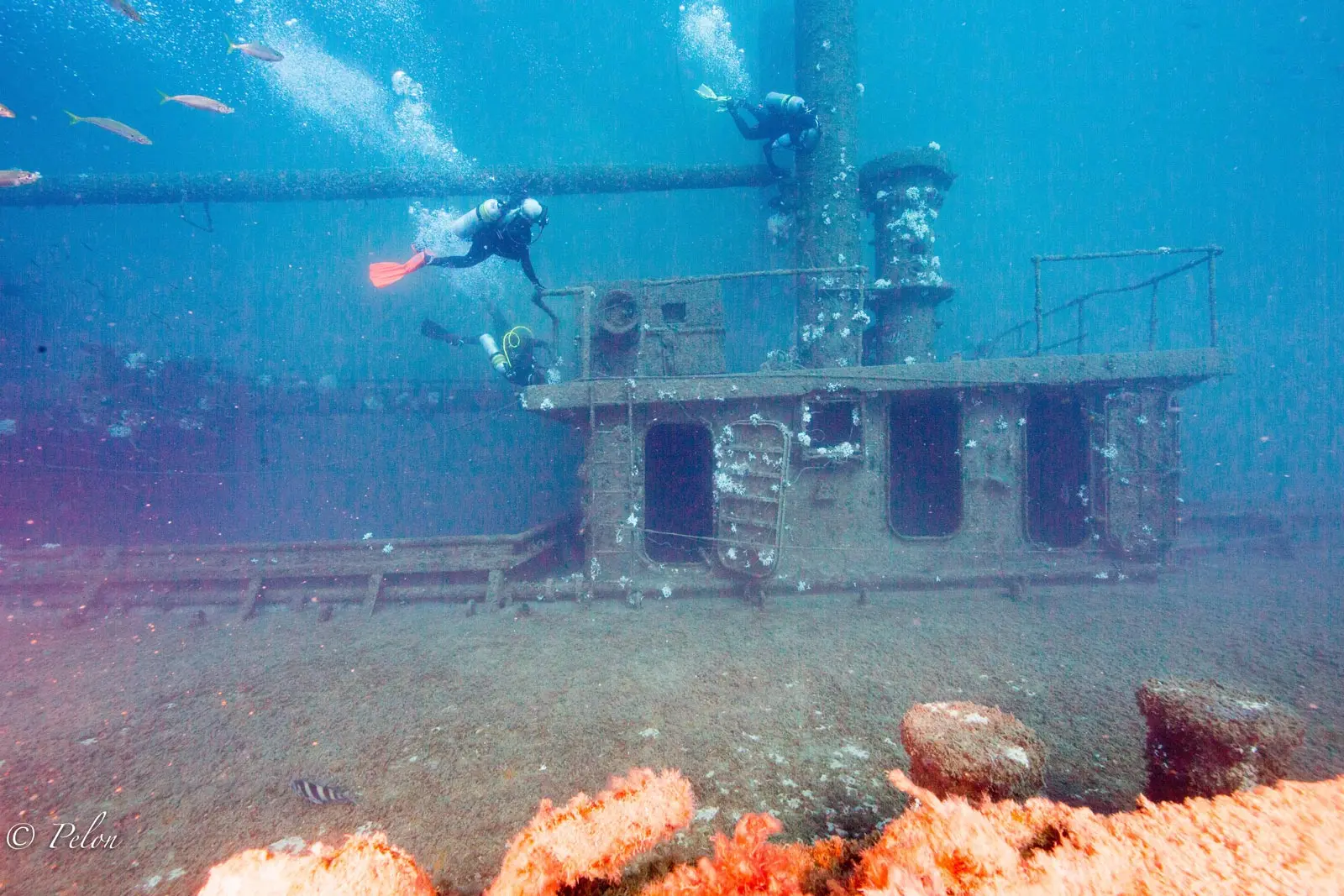
On November 17, 2007, the Texas Clipper was reefed 17 miles off the coast of South Padre Island in approximately 136 feet of water. She came to rest on her port side, her superstructure rising to 70 feet below the surface — accessible to recreational divers, demanding enough to command respect.
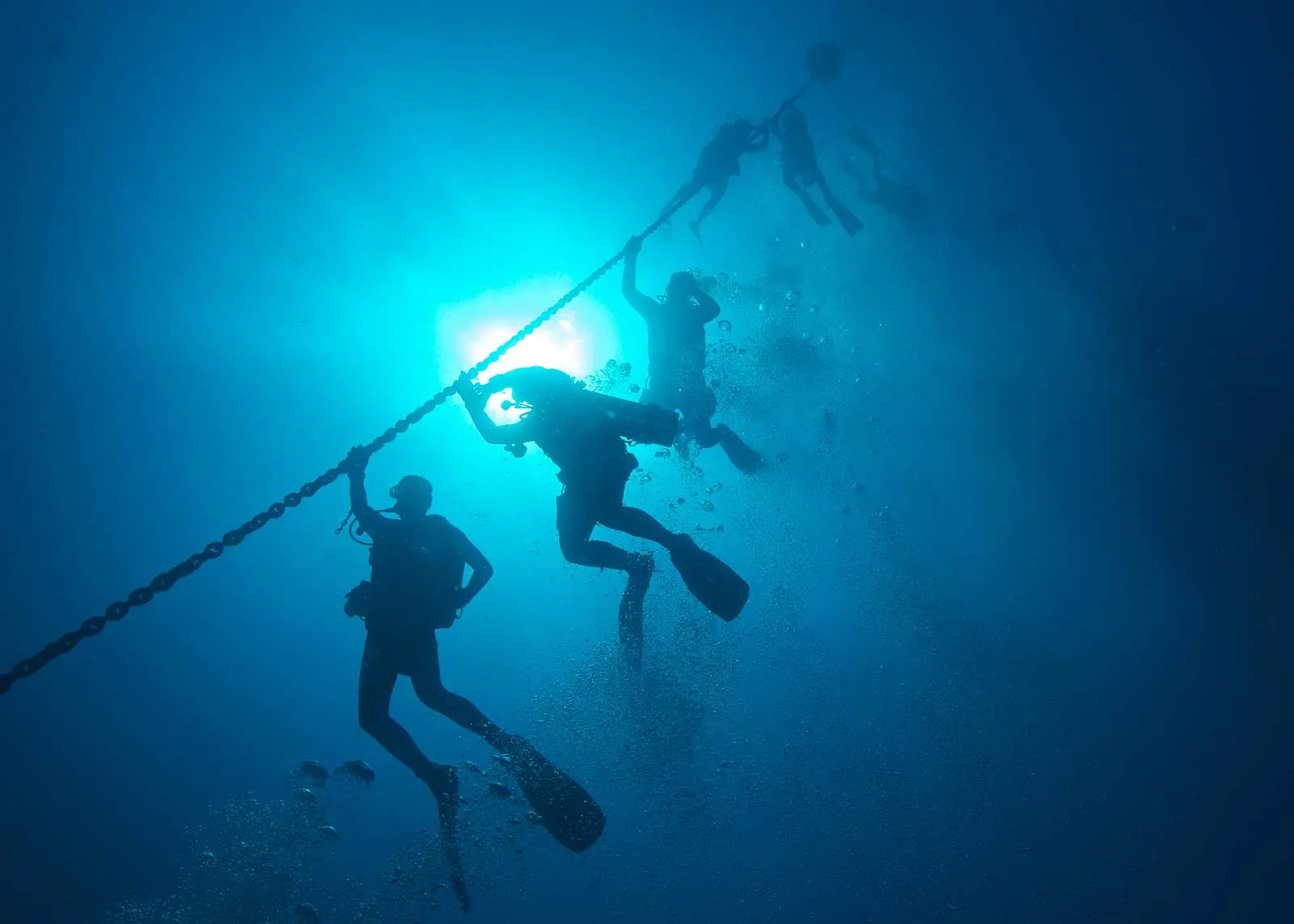
American Diving was there. Captain Tim O'Leary's operation had been a catalyst for the sinking — the dive community's appetite for a premier Texas wreck site helped make the case. For the years that followed, the Diver I carried divers out to her on 2 and 3-tank trips, working the 80 to 90-foot range along her hull.
She went in as a decommissioned training ship. She came out of it as the finest dive site in the state of Texas — and a year-round fishing destination that draws boats from across the Gulf Coast.
Soft corals colonized every surface. Thousands of fish made her home. Lionfish staked out the dark corners. Amberjack patrolled mid-water. Snapper hung in formation around the superstructure. The wreck that Texas divers had been waiting for had arrived.
The Flag Inside the Hull
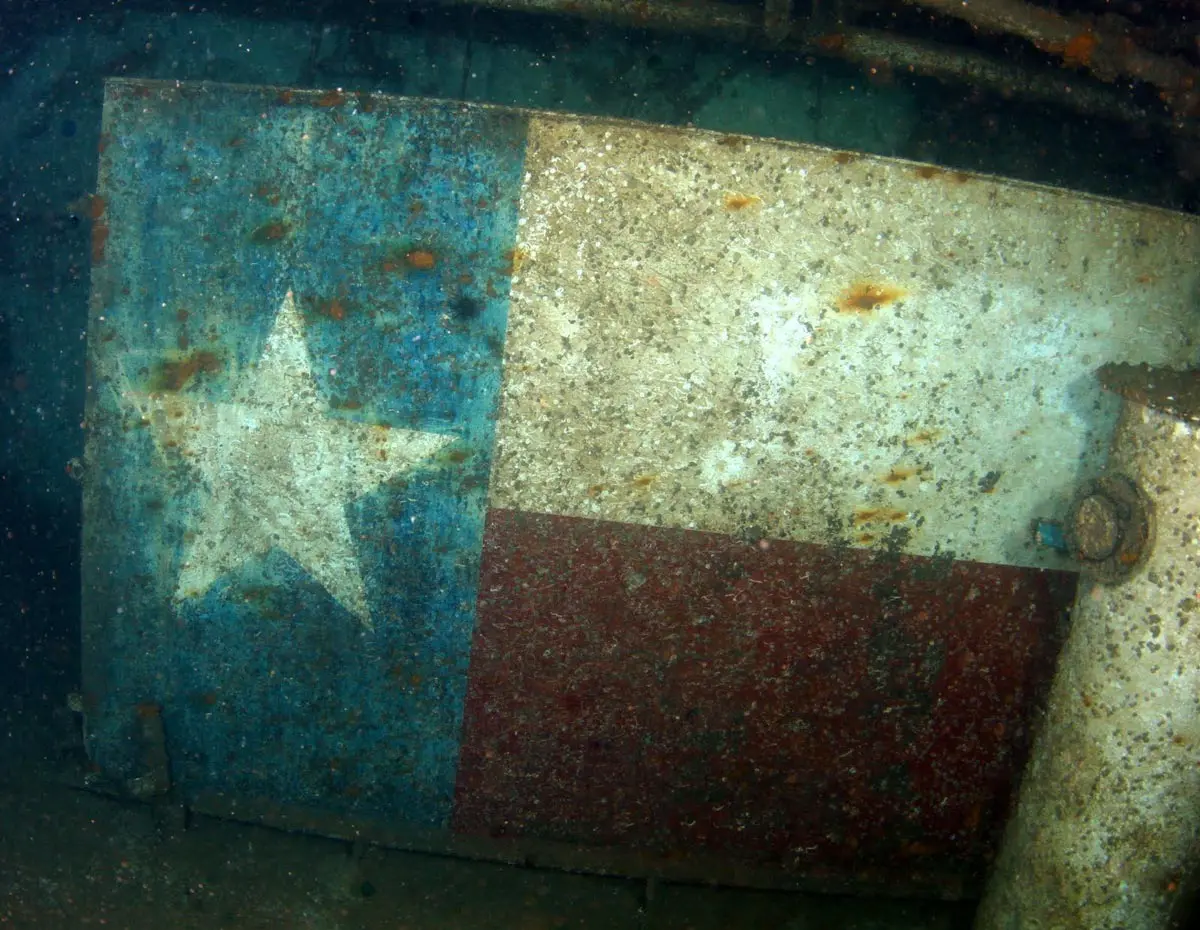
Before the Texas Clipper was sunk, someone painted a Texas flag on the inside of her hull. A deliberate act — meant to go down with the ship, sealed inside forever.
Less than a year later, Hurricane Ike made landfall on the Texas coast. One of the most destructive storms in Texas history, Ike pushed a massive storm surge across the Gulf. When the water settled, a crack had opened in the Clipper's hull.
The flag was visible for the first time.
It has been photographed hundreds of times since. It is, for many divers, the single most memorable image from the entire wreck — a quiet piece of Texas pride that nature decided to share.
Her Legacy Lives On
Mounted on the hull at depth, the commemorative plaque tells her story in full: USS Queens, SS Excambion, USTS Texas Clipper. Three lives, one ship, now home to one of the most vibrant artificial reef ecosystems on the Gulf of Mexico.
Texas Parks and Wildlife manages the site as part of the Texas Artificial Reef Program. She is accessible to recreational divers in the 80–90 foot range and draws serious wreck divers from across the country.
For more on the Texas Clipper's history, visit Texas Parks and Wildlife .
Dive Specs
Distance: 17 miles offshore
Total depth: 136 feet
Shallowest structure: 70 feet
Recreational range: 80–90 feet
The Clipper in Pictures
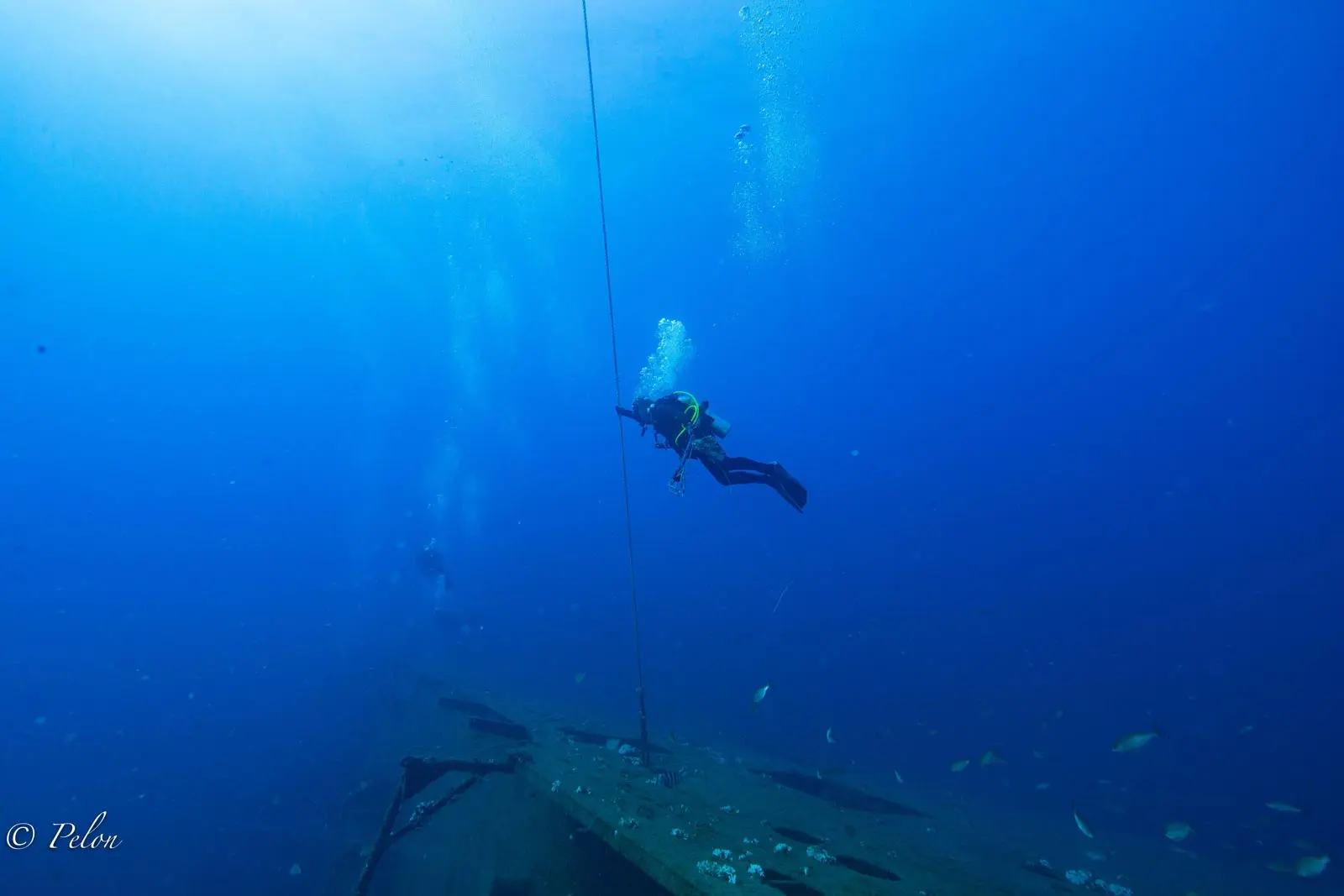
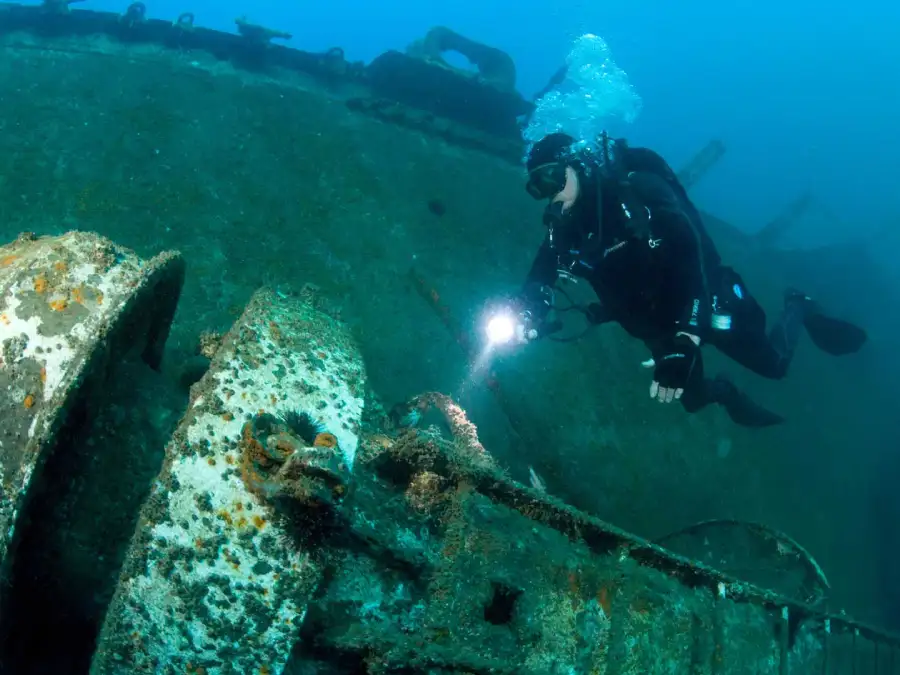
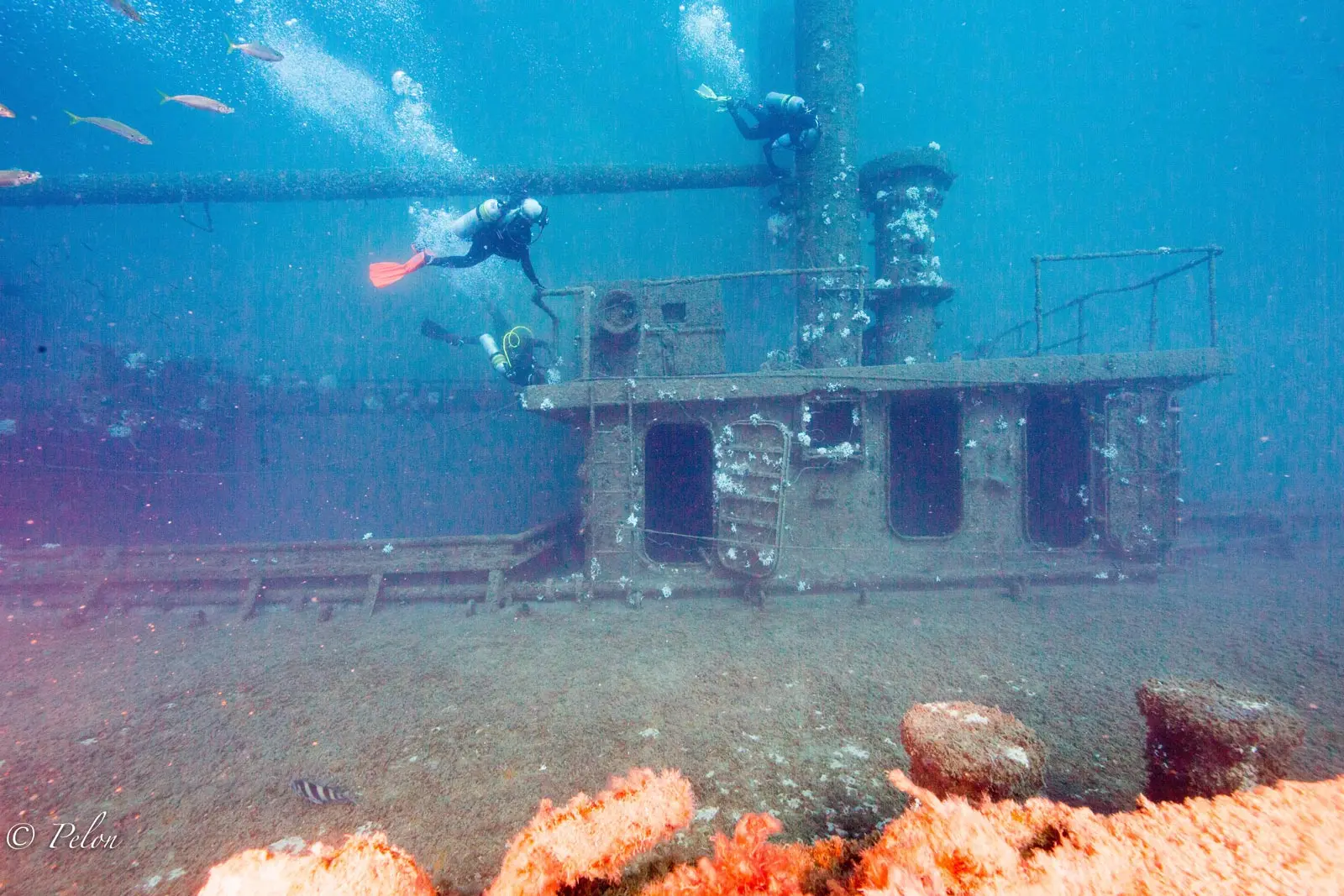
Select underwater photography © Mark “Pelon” Haynes · American Diving archive
The Adventure Continues
The dive operation is closed, but snorkel trips on the Laguna Madre continue at The Original Dolphin Watch. The same waters. The same spirit. The same Diver I.